Table of Contents
ToggleIf you’ve lost a tooth or you’re living with a bridge or denture that no longer feels right you’ve probably wondered whether dental implants are truly worth the investment. It’s one of the most common questions I hear in my Miami practice, and it deserves an honest answer rather than a sales pitch. After decades of placing and restoring implants for patients across Coconut Grove, Coral Gables, and South Florida, my short answer is: for the right candidate, dental implants are often the most reliable, long-lasting tooth replacement we can offer. But the longer answer matters more, so let me walk you through it the way I would in my consultation chair.
Quick Answer
For most healthy adults with a missing tooth, dental implants in Miami are worth it. They replace the entire tooth root and crown restoring full chewing function, preventing the jawbone loss that follows tooth loss, and lasting for decades with proper care. While the upfront cost is higher than a bridge or denture, implants typically prove more economical over time because they rarely need replacement. Candidacy depends on bone health, gum condition, and overall wellness, which a prosthodontist evaluates individually.
What Is a Dental Implant?
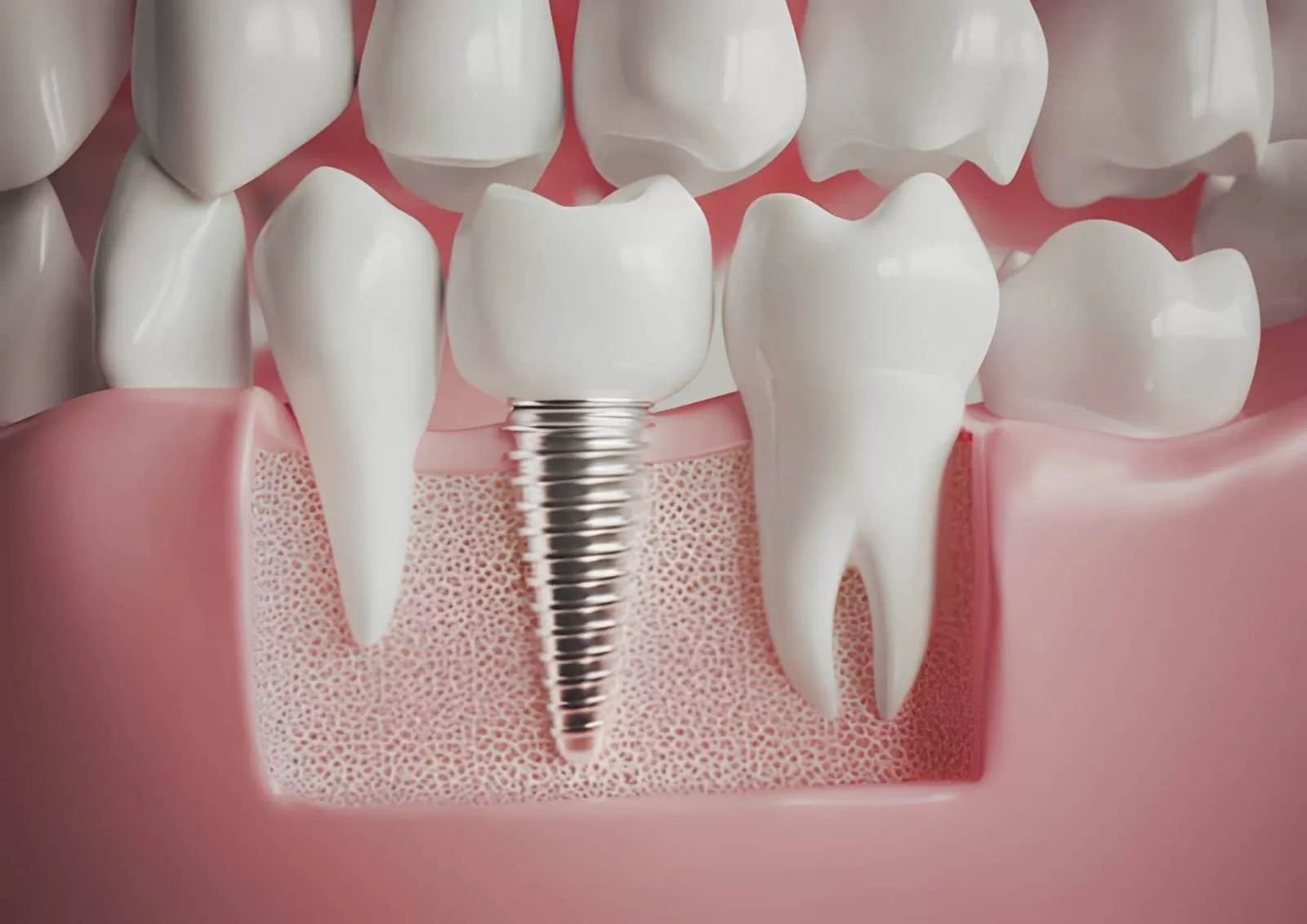
A dental implant is a small, biocompatible titanium post that’s surgically placed into the jawbone to act as an artificial tooth root. Once it integrates with the bone a natural healing process called osseointegration we attach a connector piece (the abutment) and then a custom-made crown on top. The result looks, feels, and functions remarkably like a natural tooth.
What patients are often surprised to learn is that an implant isn’t just a “fake tooth.” It’s a complete root-to-crown replacement, which is exactly why it behaves so differently from a dental bridge or removable denture that only sits on the surface. As a prosthodontist a specialist with additional years of training devoted specifically to tooth replacement and restorative dentistry this distinction is at the heart of how I plan each case.
Why Patients Consider Dental Implants
In my experience, people arrive at implant treatment from very different starting points. Some have just lost a tooth to decay, fracture, or injury. Others have worn a removable partial for years and are tired of the clicking, the adhesives, and the limited diet. Many of my Miami patients ask about implants after noticing that a long-standing gap has begun to shift their neighboring teeth or change the shape of their face.
That last concern is more than cosmetic. When a tooth root is missing, the jawbone beneath it slowly resorbs because it no longer receives the stimulation of chewing. Over years, this can give the lower face a sunken appearance and complicate future treatment. An implant is currently the only option that actively preserves that bone.
Benefits of Dental Implants
Based on my clinical experience, the advantages that matter most to patients include:
- With good hygiene and routine care, implants can last decades often a lifetime for the post itself.
- Bone preservation. The implant stimulates the jaw the way a natural root does, helping maintain facial structure.
- Full chewing function. Patients can eat the foods they love without worrying about slippage.
- No harm to neighboring teeth. Unlike a traditional bridge, an implant doesn’t require grinding down healthy adjacent teeth.
- A stable, natural-looking tooth tends to restore not just a smile but how comfortably someone speaks and laughs.
The American Dental Association recognizes dental implants as a widely accepted, long-term option for replacing missing teeth, and that reflects what I see clinically every week.
Who Is a Good Candidate?
When evaluating a patient for this treatment, I look at three things first: bone volume, gum health, and overall medical wellness. A successful implant needs enough healthy bone to anchor into, healthy tissue around it, and a body that can heal predictably.
That said, not having ideal bone today doesn’t disqualify you. Bone grafting and sinus augmentation can rebuild a foundation, and modern planning lets us place implants in situations we couldn’t have managed years ago. Factors that warrant extra caution include uncontrolled diabetes, heavy smoking, certain medications, and untreated gum disease. One mistake I frequently see is patients assuming they’ve been “told no” elsewhere and giving up when often the real answer is “not yet, until we address X.”
Procedure Overview
One question I often hear is whether the process is painful. Most patients are genuinely relieved by how manageable it is. After a thorough exam and 3D imaging, the implant is placed under local anesthesia in a single, focused appointment. You then heal for several weeks to a few months while osseointegration occurs. Once the implant is stable, we take impressions and place your final crown. In select cases, we can provide a temporary tooth the same day, though the permanent restoration follows healing. Every timeline is individual a straightforward single implant moves faster than a case involving grafting or full-mouth reconstruction, which is why I plan each step before we ever begin.
Recovery and Aftercare
Recovery after a single implant is usually milder than patients expect comparable to a routine extraction. Mild swelling and tenderness for a few days, managed with over-the-counter medication, is typical. I typically recommend soft foods initially, gentle rinsing, and avoiding the surgical site while brushing for a short period.
Long-term, an implant is cared for exactly like a natural tooth: brushing, flossing, and regular checkups. The crown can’t decay, but the surrounding gum and bone still need attention, so professional cleanings remain essential.
Risks and Considerations
I believe honest expectations build trust, so I always discuss the limitations. Like any procedure, implant placement carries some risk infection, delayed healing, or, rarely, implant failure if integration doesn’t occur. Peri-implantitis, an inflammatory condition around the implant, can develop if hygiene lapses. The National Institute of Dental and Craniofacial Research offers helpful, balanced information on oral health and tooth loss for patients who want to read further.
The good news is that with careful planning and maintenance, implant success rates are consistently high. Most complications I see are preventable and traceable to skipped follow-ups or unmanaged gum disease.
What Influences the Cost of Dental Implants in Miami?
Cost is understandably top of mind, and it’s where I encourage patients to think beyond the sticker price. In the Miami and Coconut Grove area, a single implant with its abutment and crown commonly ranges from roughly $3,000 to $6,000, depending on the specifics. Full-arch solutions such as implant-supported dentures are a larger investment, often $20,000 or more per arch.
What drives that range? The number of implants, whether bone grafting is needed, the materials chosen, and the complexity of your case. I’d caution against choosing a provider on price alone implant dentistry rewards precision and experience. When you factor in that a well-placed implant may never need replacing, while bridges and dentures often do, many patients find the long-term value compelling.
Alternative Treatment Options
Implants aren’t the only path, and I’d be doing patients a disservice to pretend otherwise. Depending on your situation, reasonable alternatives include a traditional fixed bridge, a removable partial denture, or a full denture for more extensive tooth loss. For patients focused on appearance rather than missing teeth, treatments like porcelain veneers or a broader cosmetic dentistry plan may be more appropriate. The Cleveland Clinic provides a useful overview of tooth replacement options for those comparing choices. My role as a prosthodontist is to match the solution to the person, not the other way around.
Dr. Bruno Sharp's Professional Perspective
After all these years, here’s what I tell patients sitting across from me: dental implants are worth it when they’re the right tool for your specific mouth, health, and goals. I’ve seen implants give people back the freedom to bite into an apple, speak without a second thought, and smile in photographs again. I’ve also recommended against them when a simpler option served the patient better. The “worth” of any treatment isn’t in the procedure it’s in the outcome it delivers for that individual, and a proper evaluation is the only way to know which camp you’re in.
Final Thoughts
So, are dental implants worth it? For many of my patients in Miami, Coconut Grove, and across South Florida, the answer is a confident yes because the right implant restores function, protects the jaw, and lasts. But “worth it” is personal, and the only way to answer it for you is with a careful, individualized evaluation. If you’ve been weighing your options, I’d encourage you to get the facts from a specialist before deciding.
Schedule a Consultation
If you’re considering dental implants in Miami or simply want a clear, honest assessment of your options, I’d be happy to help. Contact Sharp Dentistry to schedule a consultation, and let’s talk through what makes the most sense for your smile and your long-term health.
Frequently Asked Questions
With good oral hygiene and regular checkups, the implant post can last a lifetime, while the crown may need replacement after 10 to 15 years of normal wear.
The placement is done under local anesthesia and is generally well tolerated. Most patients describe the recovery as similar to a tooth extraction and manage it with over-the-counter pain relief.
Age itself is rarely a barrier. Overall health and bone condition matter far more than the number on your birth certificate, and many of my patients are in their 60s, 70s, and beyond.
A straightforward case often takes a few months from placement to final crown, allowing time for the implant to fuse with the bone. Cases requiring grafting take longer.
Coverage varies widely. Some plans contribute toward the crown or a portion of treatment, while others classify implants as elective. We review benefits with each patient during planning.
Often, yes. Bone grafting and sinus lifts can rebuild a foundation, so a “no” from years ago may well be a “yes” today.
That’s the goal. A custom crown is shaped and shaded to blend with your surrounding teeth so the result is difficult to distinguish from a natural tooth.