

Table of Contents
ToggleThe single biggest fear most patients have about cosmetic dentistry is simple: what if I don’t like how it looks? Veneers, crowns, and full smile makeovers are permanent decisions, and until recently, the only way to know how your new smile would turn out was to trust your dentist, commit to the treatment, and hope for the best. Digital Smile Design in Miami changes completely. Before any irreversible step is taken, you see your proposed new smile – on your own face, in your own mouth – and only move forward when the design actually feels right.
At Sharp Dentistry & Associates in Coconut Grove, Digital Smile Design is standard on cosmetic cases. This guide explains what the process is, how the preview works, and why specialist planning plus an in-house lab makes the preview actually match the final result.
What Is Digital Smile Design?
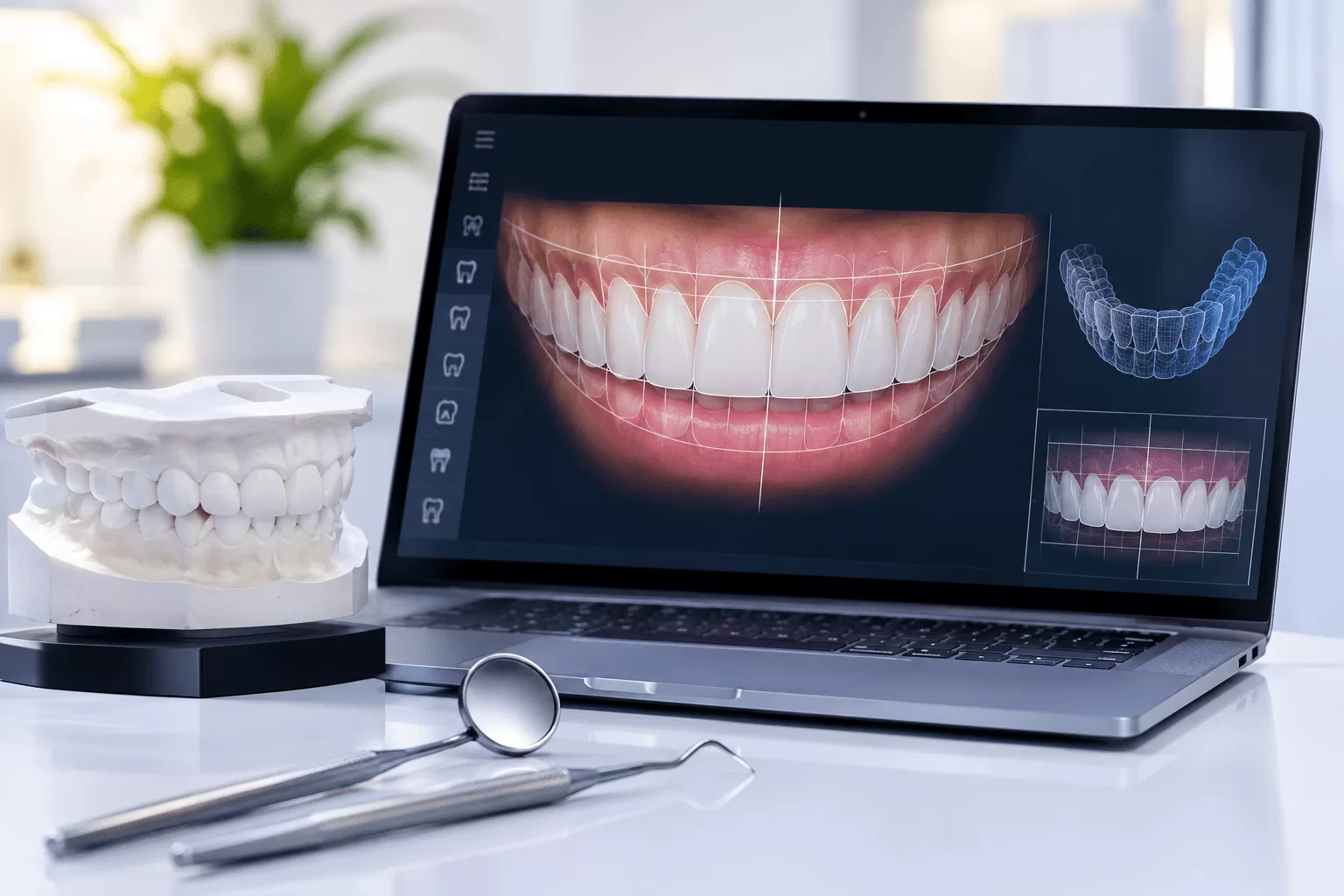
Digital Smile Design (DSD) is a planning methodology that combines digital photography, video, intraoral scans, and 3D design software to create a precise visual blueprint of a proposed smile before any treatment begins. Originally developed by Brazilian prosthodontist Dr. Christian Coachman, DSD is now a standard-of-care protocol in prosthodontic and cosmetic dentistry worldwide.
The purpose is simple: shift the design conversation from imagination to visualization. Instead of trying to describe a smile in words – brighter, straighter, a little longer – you see it. And so does your dentist, your partner, or whoever else matters to you.
How the Digital Smile Design Process Works
1. Consultation and Smile Assessment
Treatment starts with a conversation. What do you like about your smile? What bothers you? What have you always wanted to change but never named out loud? Dr. Bruno Sharp, prosthodontist, listens before anything else happens.
2. Photography, Video, and Digital Scans
A detailed set of facial and intraoral photographs is taken, along with short video clips capturing how your smile moves when you talk, laugh, and relax. A 3D intraoral scan captures the shape and position of every tooth.
3. Digital Design
The imaging data is loaded into DSD software, where the proposed smile is designed to fit your facial features – the proportion of your face, the shape of your lips, the way your smile sits when you talk. The design accounts for symmetry, tooth proportion, and the function of your bite, not just how the teeth look in isolation.
4. 2D and 3D Preview
You see the proposed smile overlaid on photographs of your own face. For patients who want a physical preview, a mock-up is fabricated in our in-house lab and temporarily placed over your teeth – so you can see, feel, and even go home and sleep on your new smile before any permanent work is done.
5. Refinement
You give feedback. The design is adjusted. If you want slightly longer centrals, a less translucent edge, a different shade of white – the design evolves until it is right. Only then does treatment move forward.
6. Treatment and Final Restoration
The final veneers, crowns, or restorations are fabricated in our in-house dental lab to match the approved design precisely. The ceramist and prosthodontist work together to translate the digital design into the final ceramic work – which is why the result matches the preview.
Why Preview Matters: Three Real Benefits
You Make a Confident Decision
Veneers are permanent. Seeing your proposed smile on your own face before treatment removes most of the fear and all of the guesswork. If something feels wrong at the mock-up stage, it is adjusted – not re-done after the fact.
Your Dentist Has a Precise Target
The design on paper is a precise brief. When the prosthodontist and the ceramist both work from the same approved visual, the final restoration matches it. Without DSD, there is more room for interpretation – and interpretation is where cases drift from expectation.
Family and Partners Can Weigh In
A big cosmetic decision is often not made alone. DSD lets you take previews home, share them with the people whose opinions matter, and come back with confidence.
Who Is Digital Smile Design For?
DSD is standard on any significant cosmetic case at Sharp Dentistry, including:
- Porcelain veneer cases – single tooth or full-arch smile makeovers
- Multiple crowns on front teeth, where aesthetics matter as much as function
- Full smile makeovers combining veneers, whitening, and gum contouring
- Full-mouth rehabilitation and All-on-4 cases, where facial proportion planning is critical
- Patients who have been disappointed by previous cosmetic work and want to be sure before committing again
For routine single-tooth restorations in the back of the mouth, DSD is usually unnecessary – a traditional workflow handles the case well.
Why Specialist Planning + In-House Lab Matters
A digital design is only as useful as the hands that execute it. At Sharp Dentistry, the design is created by a prosthodontist with the training to make judgment calls about proportion, bite, and function – and the final restoration is crafted in our in-house dental lab where the ceramist works alongside Dr. Sharp to translate the approved design into the finished ceramic work. Nothing is lost in translation to an outside lab. It is the same team start to finish, which is why veneer work at Sharp Dentistry is designed to last a lifetime – the design, the planning, and the craftsmanship all come from the same room.
Book Your Smile Design Consultation
If you have been considering veneers, crowns, or a full smile makeover and want to see the result before you commit, a Digital Smile Design consultation at Sharp Dentistry & Associates is the right first step. You will leave with a clear picture – literally – of what your new smile could look like.
Call Sharp Dentistry at (305) 857-0990 to schedule your Digital Smile Design consultation.


